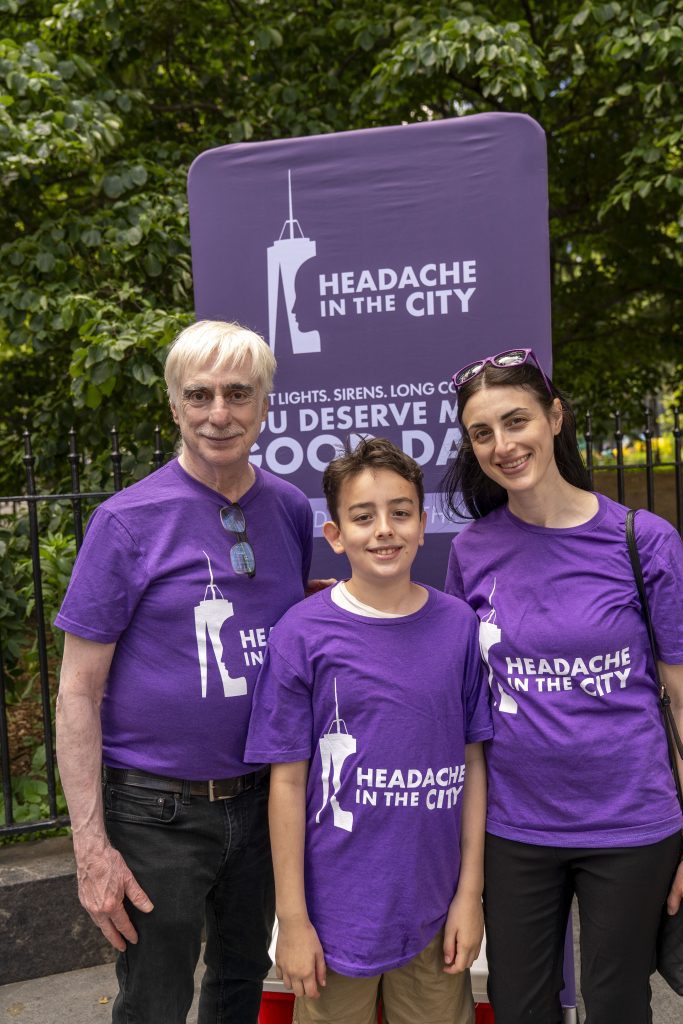
Headache in the City Brings Migraine and Headache Disorders Awareness to New York City
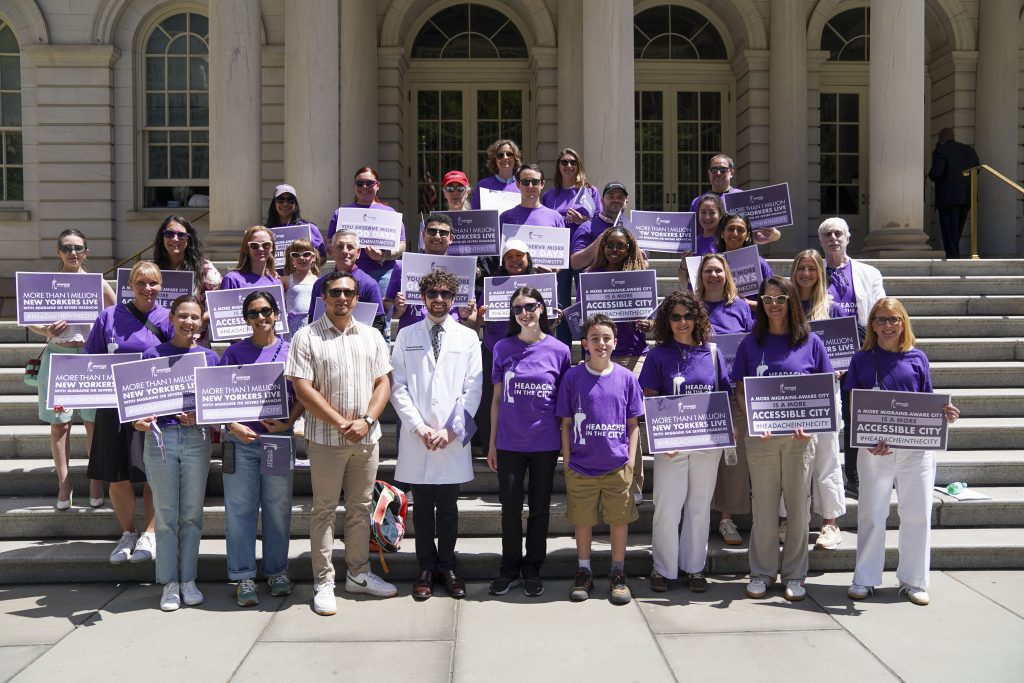
On June 15, advocates, health care professionals, community leaders, and New Yorkers living with migraine and headache disorders gathered on the steps of New York City Hall for the launch of Headache in the City, a public awareness campaign focused on making migraine and other headache disorders more visible across the five boroughs.
The event followed a morning of community outreach at busy transit locations throughout Manhattan. From 8:00 to 10:00 a.m., volunteers distributed purple awareness flags and educational materials to commuters at Grand Central, Whitehall Ferry Terminal, Fulton Street, and City Hall. In just two hours, volunteers reached approximately 1,000 New Yorkers with information about migraine and headache disorders, treatment, accommodations, and ways to better support people affected by these diseases.
More than one million New Yorkers may be living with migraine or severe headache. Yet migraine and other headache disorders remain widely misunderstood, underdiagnosed, and too often dismissed as “just a headache.”
Migraine is a disabling neurological disease that can cause severe head pain, nausea, visual disturbances, difficulty speaking or thinking, and sensitivity to light, sound, movement, and smell. These symptoms can make it difficult to work, attend school, commute, care for family, and participate fully in daily life.
For many people, New York City itself can be difficult to navigate while living with migraine or another headache disorder. Bright lights, loud sounds, crowded commutes, strong smells, heat, skipped meals, long workdays, and constant motion can trigger or worsen symptoms for some people. Those challenges can be compounded by barriers to diagnosis, treatment, workplace accommodations, and appropriate support in schools.
“Bringing Headache in the City to the place where I was born and raised was deeply personal,” said Julienne Verdi, Executive Director of The Headache Alliance. “I vividly remember experiencing my first migraine with aura while traveling to Brooklyn Law School, where I was a student, and feeling terrified and completely disabled because I did not understand what was happening. Too many New Yorkers still experience frightening symptoms without recognizing them as migraine or knowing where to turn for care. This campaign is about helping people feel seen, understand that migraine and headache disorders are real neurological diseases, and know that treatment and support are available.”
Speakers at the City Hall event included Julienne Verdi, Executive Director of The Headache Alliance and the Alliance for Headache Disorders Advocacy; Dr. Fred Cohen, a New York City-based physician certified in headache medicine by the United Council for Neurologic Subspecialties; Cannon Hodges, a migraine patient advocate and social media influencer; and Jose Ramirez Garafolo, a Staten Island resident living with migraine.
Council Member Frank Morano of Staten Island also participated in the event, joining advocates in drawing attention to the need for greater public awareness and improved access to care for New Yorkers living with migraine and headache disorders.
A major focus of the event was the shortage of specialized headache care. Fewer than 900 physicians nationwide are certified in headache medicine through the United Council for Neurologic Subspecialties. In New York City, access gaps are especially visible on Staten Island, where there are currently no UCNS-certified headache specialists practicing in the borough. For residents who need highly specialized care, that can mean traveling to another borough or outside the city entirely.
That travel can be especially difficult for someone experiencing light sensitivity, sound sensitivity, nausea, visual symptoms, severe pain, or cognitive impairment.
“I had severe headaches for as long as I can remember, and I simply learned to live with them. It wasn’t until medical residency, during a lecture, that I realized what I had been experiencing were migraine attacks. I went to see a headache medicine specialist, and it changed my life. What I once believed were inevitable attacks became something manageable,” said Dr. Fred Cohen. “That experience shaped the kind of physician I wanted to become, and ultimately led me to become a headache medicine specialist myself. But we still face a serious shortage of headache specialists, and too many people remain undiagnosed or inadequately treated.”
For Cannon Hodges, a migraine patient advocate living with Migraine with Unilateral Motor Symptoms, or MUMS, the campaign also helped name the daily barriers that many people face but few others see.
“Living with Migraine with Unilateral Motor Symptoms, or MUMS, has changed nearly every part of how I move through New York City,” said Hodges. “During attacks, MUMS can cause severe migraine symptoms along with heaviness, weakness, and difficulty moving one side of my body. I still have to take the subway to work and to medical appointments, even when the lights, noise, crowds, and motion intensify symptoms that are already disabling. Migraine and headache disorders are often invisible, but the barriers they create are very real. Headache in the City gives our community a chance to be seen and to call for a city where people like me can navigate daily life with greater understanding, dignity, and support.”
Jose Ramirez Garafolo, a Staten Island resident living with migraine, spoke about what the lack of specialty care means for people in his borough.
“Staten Island remains a headache specialist desert, leaving many residents like me with migraine no choice but to leave the borough to find appropriate care,” said Garafolo. “For a disease that affects every aspect of a person’s life, that additional burden can be significant. We need greater awareness, better access to treatment, and a stronger commitment to supporting the thousands of Staten Islanders living with migraine.”
The campaign also drew attention to the continuing health needs of New York’s 9/11 responder and survivor communities. Headache has been reported as a persistent health concern among people exposed to the World Trade Center disaster, reinforcing the importance of including neurological symptoms and headache disorders in conversations about the long-term health effects of September 11.
Migraine and headache disorders also carry a significant and inequitable burden. Migraine is the leading cause of years lived with disability among young women, and communities of color experience significant inequities in diagnosis, treatment, and access to specialty care. Veterans and LGBTQIA+ people are also disproportionately affected.
Headache in the City was created to move beyond awareness by giving New Yorkers practical ways to take action. Through HeadacheInTheCity.org, visitors can learn more about migraine and other headache disorders, find resources to help them seek care, and access tools for creating more headache-aware workplaces, schools, and communities.
The website also invites New Yorkers to take the Headache in the City pledge. By taking the pledge, individuals and organizations commit to learning more about migraine and headache disorders, challenging stigma and misinformation, supporting people who disclose that they are living with these diseases, and helping create environments where people can access appropriate care and accommodations.
Campaign resources include information for people living with migraine and headache disorders, family members, employers, educators, and community leaders. The materials are intended to help New Yorkers recognize symptoms, understand when to seek care, prepare for conversations with health care professionals, and consider practical changes that can make workplaces, schools, and public spaces more supportive.
New Yorkers can also participate by sharing a photo with a Headache in the City sign or purple awareness flag, posting their story using the hashtag #HeadacheInTheCity, and encouraging others to take the pledge.
As part of the campaign, buildings and landmarks across New York City and New York State were lit up purple on June 16 in recognition of Migraine and Headache Awareness Month. The purple lightings are intended to make these often-invisible diseases more visible and demonstrate solidarity with the more than one million New Yorkers who may be affected.
Headache in the City is part of the larger Flags for Headache national storytelling project during Migraine and Headache Awareness Month. The next installment will take place in Washington, D.C., with the Walk for Headache Health on June 23 and Speak Out for Headache Health on June 24.